:+86-13726207043
:info@yuxun.com
- All
- Product Name
- Product Keyword
- Product Model
- Product Summary
- Product Description
- Multi Field Search

Views: 262 Author: YUXUN CABLE Publish Time: 2026-07-05 Origin: Site


Content Menu
● Introduction: Why HDMI Cables Still Matter in a 4K, 8K and Beyond World
● HDMI 2.2 and the New Bandwidth Race
>> HDMI 2.0 vs 2.1 vs 2.2: Key Technical Differences
● Do You Really Need HDMI 2.2 Right Now?
>> When HDMI 2.2 Makes Business Sense
● How to Match HDMI Version to Real‑World Use Cases
>> Practical Version Guidelines
● Build Quality, Materials and Certification: What Really Impacts Performance
>> Key Technical Elements to Specify
● A Manufacturer's Step‑By‑Step Approach to OEM/ODM HDMI Projects
>> 1. Requirements Definition and Product Planning
>> 2. Engineering Design and Drawings
>> 3. Sample Production and Testing
>> 4. Mass Production and Quality Control
>> 5. Branding, Packaging and Logistics
● Market Trends: Where HDMI Demand Is Growing
● Practical Buying Checklist for HDMI Cables
● How Zhuhai Yuxun Supports International OEM/ODM HDMI Projects
● Call to Action: Plan Your Next HDMI Cable Line With Confidence
● Frequently Asked Questions (FAQ)
HDMI cables remain the backbone of modern audio‑visual setups, even as wireless streaming grows more popular and display resolutions push past 8K. For brands, wholesalers and project owners, the cable itself is no longer a simple accessory: it is a performance‑critical, brand‑defining component that shapes user satisfaction, product reviews and repeat orders. [reporteroutreach]
As an HDMI cable manufacturer offering OEM and ODM services, Zhuhai Yuxun Innovation Technology Co., Ltd. helps international partners bridge the gap between rapidly evolving HDMI standards and real‑world customer needs, from gaming and home theater to professional AV installations. This article takes a practical, expert view on the latest HDMI trends, what they mean for your business, and how to choose or develop the right cables for your market. [amzwires]

HDMI standards have moved steadily from HDMI 2.0 to 2.1, and now to HDMI 2.2, with each generation unlocking higher resolutions, refresh rates and more sophisticated audio features. The standout change with HDMI 2.2 is bandwidth: the new spec doubles the capacity of HDMI 2.1, which directly impacts how much data you can push through a single cable. [mordorintelligence]
From an industry perspective, the bandwidth jump is less about today's mainstream content and more about future‑proofing high‑end applications such as advanced gaming, medical imaging and large‑venue LED walls. Brands that plan product roadmaps beyond 4K and 8K should already be considering how HDMI 2.2 fits into their portfolios. [alliedmarketresearch]
| HDMI Version | Max Bandwidth | Typical Use Case | Key Features |
|---|---|---|---|
| HDMI 2.0 | 18 Gbps (reporteroutreach) | Mainstream 4K TVs, office monitors | 4K@60Hz, standard ARC (reporteroutreach) |
| HDMI 2.1 | 48 Gbps (reporteroutreach) | 4K gaming, 8K consumer displays | 8K@60Hz, 4K@120Hz, eARC, VRR (reporteroutreach) |
| HDMI 2.2 | 96 Gbps (reporteroutreach) | High‑end pro AV, future 12K/16K setups | 12K@120Hz, 16K@60Hz (DSC), LIP (reporteroutreach) |
For decision‑makers, the critical point is that HDMI 2.1 already covers most current commercial needs, while HDMI 2.2 is a strategic investment for ultra‑high‑end or future‑oriented projects. [reporteroutreach]
From a buyer's perspective, it is easy to assume that "latest version" equals "must‑have upgrade," but in HDMI, that is rarely the case. Most consumer and office setups still center on 4K and 8K content, which HDMI 2.1 handles comfortably with its 48 Gbps bandwidth. [linkedin]
Gaming consoles such as PlayStation 5 and Xbox Series X, current high‑end TVs, and mainstream streaming devices are designed around HDMI 2.1 capabilities rather than the full potential of HDMI 2.2. For these scenarios, a well‑built, certified HDMI 2.1 cable delivers all the performance users can actually see on‑screen. [businesswire]
HDMI 2.2 becomes genuinely relevant in niche but high‑value segments:
- High‑end gaming PCs driving extreme refresh rates on 4K and beyond displays. [mordorintelligence]
- Medical and industrial imaging where ultra‑high resolution and color accuracy are business‑critical. [alliedmarketresearch]
- Large‑scale LED installations, control rooms or broadcast environments targeting 12K or 16K video walls. [businesswire]
In these cases, specifying HDMI 2.2‑compatible cables can be a strong differentiator in tenders, RFPs and product specs, even before content fully catches up with the standard. [reporteroutreach]
Choosing the "right" HDMI version is ultimately about aligning cable capabilities with what your customers actually do. For OEM and ODM projects, this mapping should be explicit in the product requirements document, not left to assumptions. [amzwires]
- HDMI 2.0 – Best for budget‑friendly 4K@60Hz TVs, entry‑level set‑top boxes and office monitors where high refresh gaming is not a priority. [businesswire]
- HDMI 2.1 – Ideal for 4K@120Hz gaming, 8K@60Hz home theater setups, and most premium consumer electronics launched since 2023. [mordorintelligence]
- HDMI 2.2 – Reserved for future‑proof flagship product lines, professional AV, and specialized imaging solutions requiring maximum headroom. [alliedmarketresearch]
For international brands working with multiple markets, it can be efficient to define a tiered portfolio: mainstream lines built around HDMI 2.1 and flagship or project‑specific lines adopting HDMI 2.2. [fnfresearch]
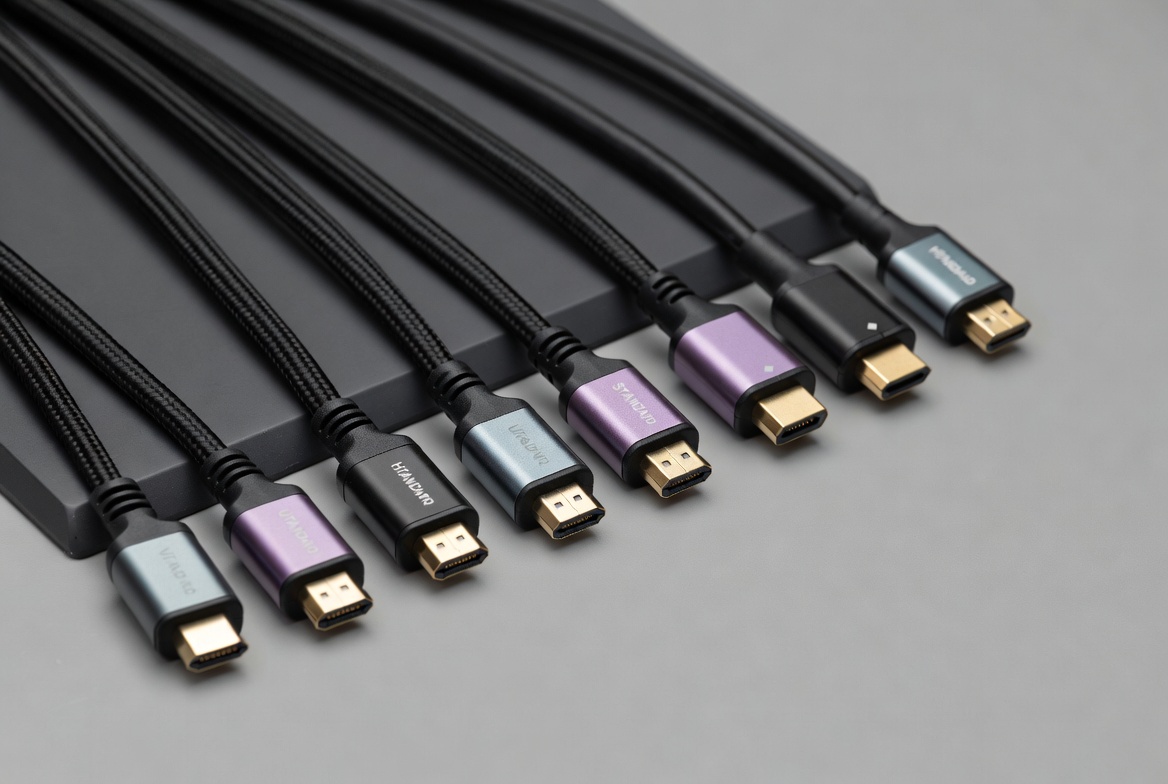
Even within the same HDMI version, cable performance varies widely based on conductor quality, shielding and connector design. Users often experience flickering, intermittent signal loss or failure to reach advertised resolutions not because of the TV or console, but because of poor cable construction. [amzwires]
From a manufacturing standpoint, performance stability at higher bandwidths demands precise control of materials and processes, especially for HDMI 2.1 and 2.2 cables. [fnfresearch]
1. Conductor and Shielding
High‑purity copper conductors, multi‑layer shielding and optimized cable geometry are essential to maintain signal integrity at 48 Gbps and above. [amzwires]
2. Connector Design
Robust, accurately machined connectors with gold‑plated contacts reduce contact resistance and improve durability under frequent plug‑and‑unplug cycles. [reporteroutreach]
3. Outer Jacket and Flexibility
A durable, yet flexible outer jacket protects the cable in tight installations and reduces the risk of internal damage over time. [businesswire]
For HDMI 2.2, Ultra96 certification signals that the cable has passed stringent performance tests and can reliably deliver the bandwidth and resolutions the spec promises. [reporteroutreach]
Successful OEM and ODM HDMI cable projects follow a structured process that reduces risk and ensures that the finished product aligns with both technical standards and brand expectations. At Zhuhai Yuxun Innovation Technology Co., Ltd., we work with partners across this full lifecycle. [amzwires]
The process begins with a detailed requirement intake covering:
- Target market (e‑commerce, retail, professional AV, engineering projects). [amzwires]
- HDMI version, target resolutions and refresh rates. [mordorintelligence]
- Cable length ranges and application scenarios (home theater, office, industrial). [businesswire]
- Jacket material, color and connector form factor aligned with brand identity. [amzwires]
Clear requirements at this stage help avoid downstream redesigns and delays, especially when marketing and technical teams are involved from different countries. [mikekhorev]
Once requirements are set, the engineering team translates them into:
- Conductor specifications and shielding architecture. [amzwires]
- Insulation materials and overall cable diameter for balanced flexibility and robustness. [businesswire]
- Custom connector molds and housing designs for unique visual branding. [amzwires]
Drawings are shared for approval so that stakeholders can verify both technical fit and aesthetics before investing in tooling or samples. [amzwires]
After design sign‑off, prototypes are produced and tested under real‑world scenarios:
- Visual checks on finish, branding and overall build quality. [amzwires]
- Functional tests at target resolutions and refresh rates, including 4K, 8K and gaming use cases. [mordorintelligence]
- Durability tests covering repeated insertion cycles and mechanical stress. [businesswire]
Feedback from partners at this stage often leads to fine‑tuning, such as adjusting cable stiffness for wall‑mounted TVs or refining connector grip for professional installers. [amzwires]
In mass production, consistency is the core performance metric. To achieve this, manufacturers implement: [fnfresearch]
- Incoming material inspection to keep conductor and shielding quality stable. [amzwires]
- In‑process monitoring of critical dimensions and assembly steps. [businesswire]
- Final testing on random samples to verify bandwidth, signal integrity and mechanical quality. [amzwires]
For global brands, detailed QC reports and traceability can be integrated to support compliance and after‑sales service. [fnfresearch]
The last stage turns cables into ready‑to‑sell products:
- Logo engraving on connectors and printed jackets for brand presence. [amzwires]
- Retail packaging concepts (color boxes, blister packs) or bulk packing for wholesale. [fnfresearch]
- Coordinated shipment planning, documentation and optional media assets (photos, videos) for online listings. [amzwires]
OEM and ODM collaboration at this phase helps align physical product presentation with digital marketing, ensuring that what customers see online matches what they receive. [mikekhorev]
Recent market research indicates that the global HDMI cable market continues to grow, driven by increasing adoption of AV devices, 4K/8K televisions and streaming services. Reports estimate the market reaching several billion USD in the coming years, with Asia‑Pacific accounting for a significant share thanks to rapid consumer electronics and ICT industry expansion. [alliedmarketresearch]
For brands and wholesalers, the opportunity lies not only in selling more cables but in segmenting offerings: standard HDMI for mainstream home use, high‑speed and ultra‑high‑speed cables for gaming and high‑end TVs, and specialized cables for industrial and automotive applications. [alliedmarketresearch]
To help technical buyers, distributors and project managers evaluate HDMI cables more efficiently, the following checklist can be applied to any product, whether off‑the‑shelf or custom‑developed. [reporteroutreach]
1. Confirm HDMI Version
Match cable version to device capabilities and target resolution/refresh rate. [mordorintelligence]
2. Check Bandwidth Rating
Ensure the claimed bandwidth supports your use case (for example, 48 Gbps for 4K@120Hz or 8K@60Hz). [alliedmarketresearch]
3. Look for Certification
Prefer certified HDMI 2.1 or Ultra96‑rated HDMI 2.2 cables for mission‑critical applications. [reporteroutreach]
4. Assess Build Quality
Inspect jacket thickness, connector robustness and overall finish. [amzwires]
5. Validate Vendor Capability
Review the manufacturer's engineering, testing and quality control processes, especially for OEM/ODM projects. [fnfresearch]
Applied consistently, this simple checklist reduces the risk of post‑installation issues and supports stronger user reviews, fewer returns and better long‑term customer satisfaction. [mikekhorev]
Zhuhai Yuxun Innovation Technology Co., Ltd. specializes in HDMI and related cable solutions for overseas brands, wholesalers and manufacturers who need a reliable partner to design, produce and scale high‑performance cables. Our engineering and production teams combine high‑precision manufacturing with flexible customization to support different markets, from consumer electronics to specialized industrial systems. [fnfresearch]
By focusing on standards‑compliant design, rigorous testing and transparent communication, we help partners launch HDMI product lines that are both technically sound and market‑ready. Whether you need private label HDMI cables for your retail brand or project‑specific cables for professional installations, our OEM/ODM services are structured to deliver consistent, long‑term value. [mikekhorev]
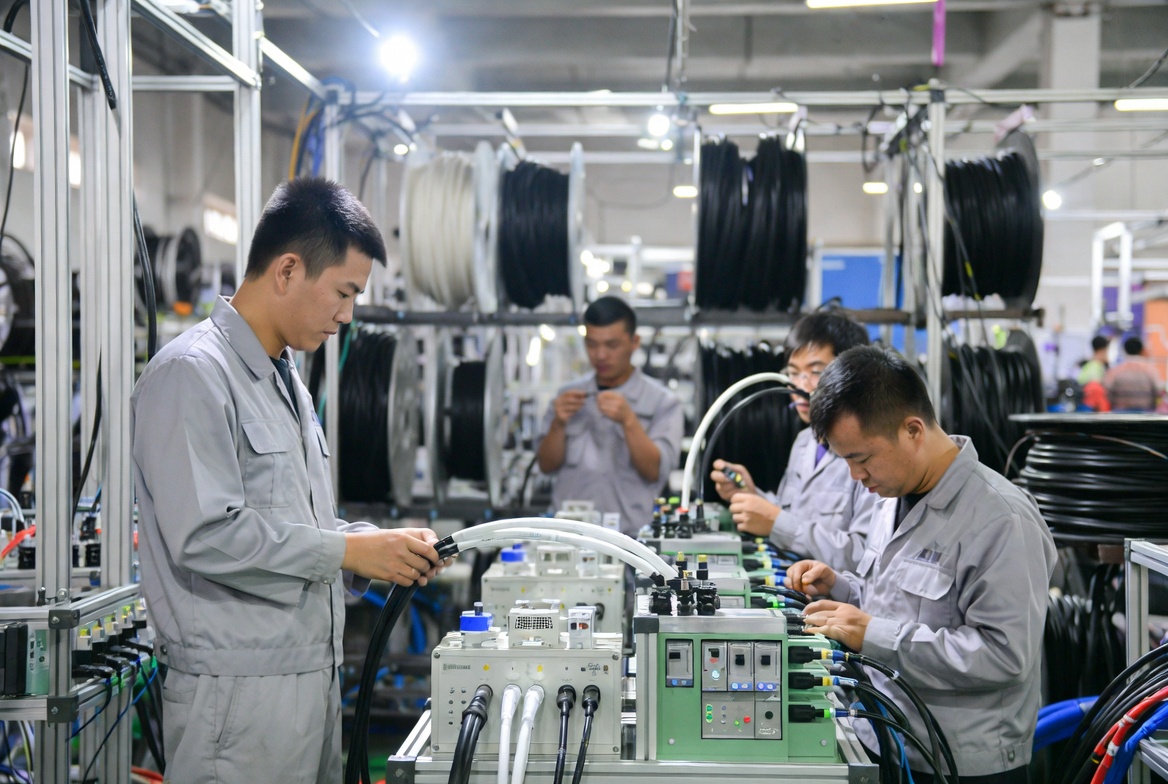
If you are planning a new HDMI product line, upgrading existing cables, or preparing for higher‑resolution AV projects, partnering with an experienced manufacturer can significantly reduce risk and time‑to‑market. Zhuhai Yuxun Innovation Technology Co., Ltd. offers end‑to‑end OEM and ODM support—from engineering design and sampling to certification, mass production and branded packaging—so your team can focus on market strategy while we handle the technical backbone. [mordorintelligence]
To explore options for HDMI 2.0, 2.1 or future‑ready HDMI 2.2 cables tailored to your brand and markets, you can share your requirements and start a structured, expert‑guided project evaluation with our team. [alliedmarketresearch]
Q1: Is HDMI 2.2 backwards compatible with older devices?
Yes. HDMI 2.2 cables work with older HDMI ports, but performance will be limited to the device's supported standard, such as HDMI 2.0 or 2.1. [reporteroutreach]
Q2: Do I need a special HDMI cable for 4K gaming at 120Hz?
You should use a high‑quality HDMI 2.1 cable rated for 48 Gbps to reliably support 4K@120Hz gaming on compatible consoles or PCs. [mordorintelligence]
Q3: Why do some HDMI cables fail to deliver their advertised resolution?
Common causes include weak shielding, poor connector quality or exaggerated claims not backed by certification and proper testing. [businesswire]
Q4: How can OEM/ODM partners ensure consistent cable quality in large orders?
By implementing strict incoming material checks, in‑process monitoring and final performance testing, manufacturers can keep mass‑produced cables within defined tolerances. [fnfresearch]
Q5: What should brands consider when designing custom HDMI cable packaging?
Focus on clear version and bandwidth labeling, visual alignment with brand identity, and protective packaging that suits your distribution channel (e‑commerce, retail or wholesale). [mikekhorev]
1. Allied Market Research – *HDMI Cable Market by Type, Grade and Application: Global Opportunity Analysis and Industry Forecast, 2019–2026*
[https://www.alliedmarketresearch.com/hdmi-cable-market]
2. Mordor Intelligence – *HDMI Market Size, Share, Growth & Industry Trends*
[https://www.mordorintelligence.com/industry-reports/hdmi-market]
3. ResearchAndMarkets – *Global HDMI Cable Market (2019 to 2026) – Opportunity Analysis and Industry Forecast*
[https://www.researchandmarkets.com/reports/hdmi-cable-market]
4. Foyun – *HDMI Cables: Latest Trends and What They Mean for You*
[https://fycables.com/hdmi-cables-latest-trends-and-what-they-mean-for-you/]
5. OEM/ODM HDMI Manufacturing Process Article – *OEM/ODM HDMI Cable Manufacturing: From Drawing to Completion*
[https://www.amzwires.com/news/oem-odm-hdmi-cable-manufacturing-from-drawing-to-completion/]
6. HDMI Cable Market Trend Report – *HDMI Cable Market Size, Growth Research Report [2026‑2034]*
[https://www.fnfresearch.com/hdmi-cable-market]
7. SEO for Tech Companies Articles – Representative guides on SEO strategy for technology and AV brands
[https://mikekhorev.com/seo-for-tech-companies]
[https://www.reporteroutreach.com/blog/seo-for-technology-companies]


