:+86-13726207043
:info@yuxun.com
- All
- Product Name
- Product Keyword
- Product Model
- Product Summary
- Product Description
- Multi Field Search

Views: 232 Author: YUXUN CABLE Publish Time: 2026-06-25 Origin: Site


Content Menu
● Core Performance Parameters You Must Know
>> 3. Resistance to Interference
>> 4. Reliability and Signal Stability
>> 5. Device and Network Compatibility
● Cable Materials and Construction: Where Quality Really Shows
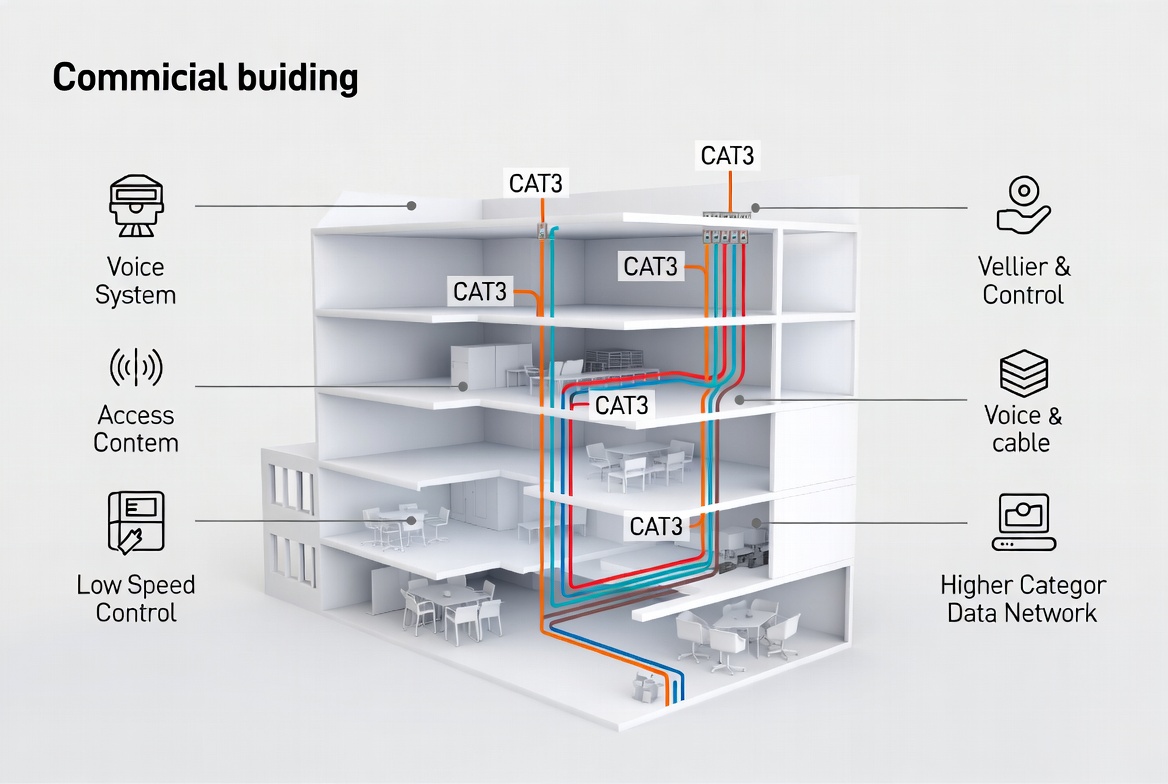
● Where CAT3 Still Makes Business Sense
● When You Should NOT Choose CAT3
● Practical Selection Checklist for Engineers and Buyers
● OEM/ODM Insights: Designing a CAT3 Solution That Fits Your Brand
>> 1. Custom Electrical and Mechanical Specs
>> 2. Compliance, Testing, and Traceability
● Installation Best Practices From the Field
● How CAT3 Compares With Higher Category LAN Cables
● Expert Tips for Specifying CAT3 in Tenders and RFQs
● How a Specialized OEM/ODM Manufacturer Supports Your Project
● Call to Action: Turn CAT3 From a Legacy Item Into a Strategic Product
● Frequently Asked Questions (FAQ)
As a LAN cable OEM/ODM manufacturer serving global brands, I often get the same question from network engineers and project buyers: "Is CAT3 cable still worth using, and what should I really look at in its performance?" This guide combines hands‑on factory experience with up‑to‑date industry practices so you can evaluate CAT3 realistically and specify it correctly in your next project. [blog.saleslayer]

CAT3 (Category 3) is an early‑generation twisted pair cable designed primarily for voice and low‑speed data up to 10 Mbps. It operates at a characteristic transmission frequency of 16 MHz and was historically used for 10BASE‑T Ethernet and 4 Mbps Token Ring networks. [facturmfg]
In practical B2B projects today, CAT3 is still used where: [facturmfg]
- Voice systems (PBX, intercom, legacy telephone) dominate the requirement.
- Data demand is modest, often below 10 Mbps per channel.
- Budget and installed infrastructure strongly favor reusing existing copper.
For OEM and ODM partners, CAT3 remains a cost‑effective, stable option when the network design is clear about its limits and use cases. [facturmfg]
When evaluating or specifying CAT3, focus on these non‑negotiable performance points. [searchengineland]
CAT3 is engineered for: [facturmfg]
- Transmission frequency: up to 16 MHz
- Maximum data rate: 10 Mbps (10BASE‑T)
- Typical applications include:
- Voice transmission
- 10 Mbps Ethernet (10BASE‑T)
- 4 Mbps Token Ring
If your application requires 100 Mbps or 1 Gbps, you should move to CAT5e, CAT6 or higher categories and treat CAT3 only as a voice or low‑speed control line, not as a general data backbone. [searchengineland]
Under standard conditions, CAT3 supports up to 100 m per segment between active devices. Beyond this length, you can expect: [facturmfg]
- Increased signal attenuation.
- Higher error rates and retransmissions.
- Noticeable drops in connection stability.
For large office buildings or campus‑style deployments, plan your wiring closets and intermediate switches so that each CAT3 run stays within 100 m, or use repeaters/extenders and higher‑category backbone cables. [wisernotify]
CAT3 offers basic resistance to: [facturmfg]
- Electromagnetic interference (EMI) from motors, transformers, and power cables.
- Radio frequency interference (RFI) from wireless devices and radio systems.
However, in environments with high EMI or strong RF sources (industrial workshops, elevators, HVAC rooms), standard CAT3 can suffer from: [wisernotify]
- Increased crosstalk and noise.
- Intermittent errors and voice quality issues.
In such cases, consider: [mysticdigi]
- Shielded twisted pair (STP) versions.
- Proper grounding and separation from power lines.
- Metal cable trays or conduits as an extra physical shield.
For business‑critical operations, reliability matters more than nominal speed. With well‑manufactured CAT3, you can expect: [blog.saleslayer]
- Stable signal levels across the rated distance.
- Low error rates during continuous operation.
- Minimal downtime from cable‑related failures.
In our daily manufacturing practice, we see that installation quality often affects reliability more than category itself: improper bending radius, tight bundling, or pulling the cable beyond its tensile limit can degrade performance even if the electrical design is correct. [facturmfg]
CAT3 should integrate smoothly with: [facturmfg]
- Legacy PBX and analog/digital phone systems.
- 10BASE‑T Ethernet switches and hubs.
- Older Token Ring systems in special environments.
Before large‑scale deployment, we always recommend that integrators: [searchengineland]
- Confirm port support (10 Mbps/half‑duplex) on switches and routers.
- Validate compatibility in mixed environments where CAT3 and higher‑category cables co‑exist.
- Ensure clear labeling and documentation to avoid misusing CAT3 as a high‑speed data link.
From a manufacturer's perspective, material selection is the foundation of CAT3 performance and lifespan. [facturmfg]
High‑quality CAT3 typically uses:
- Solid bare copper conductors for low resistance and reliable terminations. [facturmfg]
- Consistent conductor diameter to ensure predictable impedance. [facturmfg]
Cheap alternatives like copper‑clad aluminum (CCA) may look similar but tend to have higher resistance, more heat, and weaker mechanical properties, especially under repeated bending or punch‑down operations. [mysticdigi]
Common materials include:
- PE or PVC for the core insulation.
- PVC, LSZH, PU, or fluoropolymers for the outer jacket, depending on fire rating and environment. [facturmfg]
In harsh or mission‑critical environments, we often recommend: [blog.saleslayer]
- LSZH (Low Smoke Zero Halogen) for indoor public areas and high‑occupancy buildings.
- UV‑resistant jackets for outdoor or exposed installations.
The jacket not only protects against mechanical damage but also influences flexibility, temperature resistance, and long‑term durability. [facturmfg]
Even in the era of gigabit networks, CAT3 continues to deliver value in the right scenarios. [facturmfg]
- Voice infrastructure: PBX lines, analog phones, intercoms, and paging systems. [facturmfg]
- Low‑speed control and monitoring: Building automation systems, door access control, basic sensors. [facturmfg]
- Cost‑sensitive retrofits: Re‑using existing conduits and patch panels when upgrading only part of the network. [blog.saleslayer]
In such projects, the cost per meter, simplicity, and proven reliability of CAT3 can outweigh its limited bandwidth. [blog.saleslayer]
From an expert standpoint, we advise customers to avoid CAT3 when: [searchengineland]
- You need 100 Mbps, 1 Gbps, or higher for data.
- The installation must support future upgrades without recabling.
- The environment has heavy EMI/RFI and no shielding is planned.
- There are strict fire safety, smoke, or toxicity regulations requiring advanced jacket materials that are easier to meet in newer categories.
For new building backbones or high‑density office floors, we recommend CAT5e, CAT6, or fiber, and reserve CAT3 for voice or non‑critical low‑speed lines only. [searchengineland]
When we work with overseas OEM/ODM partners, we typically walk through this simple decision checklist: [blog.saleslayer]
1. Define the main application.
Voice only, low‑speed control, or mixed data and voice?
2. Confirm required bandwidth and data rate.
If you need more than 10 Mbps per channel, reconsider CAT3.
3. Measure the longest planned cable run.
Keep it under 100 m, or plan for repeaters/higher‑category segments.
4. Assess the electromagnetic environment.
Heavy machinery, elevators, or radio equipment may require shielding.
5. Clarify fire and safety requirements.
Check whether LSZH, plenum, or special ratings are mandatory.
6. Verify device compatibility.
Make sure switches, PBX, and terminal devices fully support 10 Mbps/voice over CAT3.
7. Evaluate total lifecycle cost.
Sometimes upgrading to CAT5e/CAT6 now reduces future recabling costs.
This structured approach helps avoid over‑ or under‑specifying and ensures the cable choice aligns with real‑world deployment conditions. [wisernotify]
As an OEM/ODM partner, our goal is not only to meet category standards but also to align with your brand positioning and target markets. [tradekey]
Based on your application, we can fine‑tune: [mysticdigi]
- Conductor gauge and twisting parameters for specific installation needs.
- Jacket hardness and flexibility to match your customers' typical routing methods.
- Shielding options (UTP/STP) and drain wires for noise‑sensitive environments.
This ensures your CAT3 products deliver consistent performance in the exact scenarios you sell into—whether that's office voice networks, hotel retrofits, or industrial facilities. [mysticdigi]
To strengthen your brand's credibility, every batch can be: [quickcreator]
- Tested for continuity, attenuation, and NEXT according to relevant standards.
- Marked with production date and batch codes for field traceability.
- Supplied with test reports or factory CoC (Certificate of Conformity).
Even a high‑quality CAT3 cable can fail if installed incorrectly. Based on real projects and customer feedback, here are practical tips to protect performance: [facturmfg]
- Respect the bend radius. Avoid sharp bends around corners or tight tie‑downs.
- Avoid excessive pulling tension. Use rollers or lubricants when pulling through long conduits.
- Separate from power lines. Maintain distance or use separate conduits to reduce EMI.
- Label both ends clearly. This prevents mis‑patching and accidental use of CAT3 for high‑speed data.
- Test after installation. Run basic continuity and performance tests before handover.
These habits result in fewer callbacks, less troubleshooting, and better long‑term ROI for both contractors and end users. [wisernotify]
For buyers who manage multiple cable categories, this quick overview is useful when deciding where CAT3 still fits into your product lineup. [searchengineland]
| Parameter | CAT3 (Legacy Voice/Data) | CAT5e (Baseline Data) | CAT6 (High‑Speed Data) |
|---|---|---|---|
| Typical bandwidth | 16 MHz (facturmfg) | 100 MHz (searchengineland) | 250 MHz+ (searchengineland) |
| Max data rate | 10 Mbps (facturmfg) | 1 Gbps (searchengineland) | 1–10 Gbps (distance‑dependent) (searchengineland) |
| Typical segment length | 100 m (facturmfg) | 100 m (searchengineland) | 55–100 m (application‑dependent) (searchengineland) |
| Primary use | Voice, low‑speed control (facturmfg) | General office data (searchengineland) | High‑density, high‑speed LAN (searchengineland) |
| Future‑proofing | Low (facturmfg) | Medium (searchengineland) | High (searchengineland) |
From an OEM/ODM perspective, offering CAT3 alongside CAT5e/CAT6 allows you to cover legacy voice systems while positioning higher categories for modern data networks. [blog.saleslayer]
When you prepare tenders or RFQs, clear technical language helps avoid misunderstanding and price‑only decisions. Consider specifying: [blog.saleslayer]
- Category: CAT3, solid bare copper, twisted pair, UTP/STP as required.
- Conductor size: e.g., 24 AWG solid for standard voice runs.
- Outer jacket: PVC/LSZH, color, and temperature rating.
- Standards compliance: reference relevant telecom and safety standards applicable in your market.
- Test requirements: 100% continuity test and spot performance testing per lot.
These details make it easier for serious manufacturers to quote accurately and help you compare offers on a like‑for‑like technical basis, not just on unit price. [blog.saleslayer]
Working with a manufacturer focused on LAN cables and communication wiring gives you more than just product; it gives you engineering support across the project lifecycle. [tradekey]
A specialized partner can assist with:
- Pre‑sales consulting: Choosing between CAT3 and higher categories based on your application and market expectations. [blog.saleslayer]
- Customized labeling and branding: Printed meter markings, OEM packaging, and documentation aligned with your brand. [tradekey]
- Post‑installation feedback loop: Collecting real‑world performance data to refine future batches. [quickcreator]
This collaborative approach transforms CAT3 from a commodity product into a reliable, branded solution that supports your positioning as a professional network supplier. [tradekey]
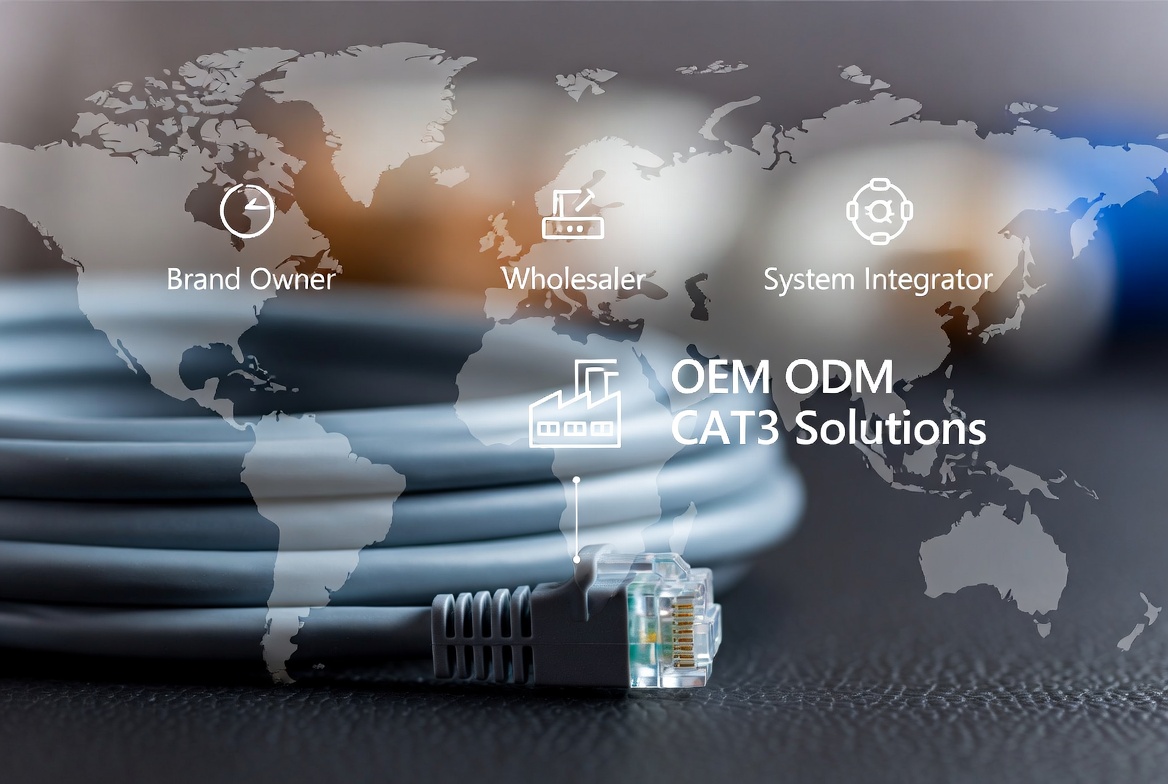
If you are a brand owner, wholesaler, or system integrator, CAT3 does not have to be an afterthought in your catalog. [tradekey]
By partnering with an experienced LAN cable manufacturer, you can:
- Offer stable, cost‑effective CAT3 solutions for voice and low‑speed control.
- Combine CAT3 with CAT5e/CAT6 product families to cover complete building infrastructure.
- Leverage OEM/ODM services to match your specifications, compliance needs, and branding.
Reach out with your target market, typical projects, and technical requirements, and we can help you define a CAT3 product line that fits seamlessly into your portfolio and supports your long‑term growth in the network cabling market. [tradekey]
1. Is CAT3 cable still acceptable for new installations?
Yes, CAT3 is still acceptable for voice‑only or low‑speed control systems, especially when budgets are limited or when matching existing infrastructure. For new data‑centric networks, however, CAT5e or higher is strongly recommended. [searchengineland]
2. Can CAT3 support Power over Ethernet (PoE)?
Basic PoE may operate over some CAT3 installations, but it is not generally recommended due to higher resistance, potential heating, and limited bandwidth. For reliable PoE, especially at higher power levels, CAT5e or better is the standard choice. [wisernotify]
3. How far can I run CAT3 without performance issues?
Under normal conditions, CAT3 can be run up to 100 meters per segment. Exceeding this length usually causes attenuation, increased error rates, and instability, particularly in data applications. [facturmfg]
4. What is the main difference between CAT3 and CAT5e?
CAT3 is designed for 16 MHz and 10 Mbps, while CAT5e supports 100 MHz and up to 1 Gbps, with stricter controls on crosstalk and attenuation. In practice, CAT5e is preferred for modern data networks, whereas CAT3 is typically reserved for voice and low‑speed control. [searchengineland]
5. What should I check when sourcing CAT3 from an OEM/ODM manufacturer?
Verify that the cable uses solid bare copper conductors, meets the required safety and fire ratings, has clear test documentation, and that the manufacturer can support your needs for branding, packaging, and long‑term supply stability. [blog.saleslayer]
1. Zion Communication – “CAT3 Cable: Knowing all the performance key points” (accessed 2026). https://www.zion-communication.com/cat3-cable-knowing-all-the-performance-key-points.html
2. FacturMFG – “SEO for Manufacturers: A No‑Nonsense Guide”. https://facturmfg.com/blog/seo-for-manufacturers-guide/
3. Search Engine Land – “Product descriptions & product page SEO guide”. https://searchengineland.com/product-page-seo-guide-437261
4. Sales Layer – “SEO for Manufacturing Companies: The 2026 Strategy Guide”. https://blog.saleslayer.com/seo-for-manufacturing-companies
5. QuickCreator – “E‑E‑A‑T for Technical Content: 2025 Best Practice Guide”. https://quickcreator.io/blog/eeat-for-technical-content-2025-best-practice-guide/
6. QuickCreator – “E‑E‑A‑T Checklist for SEO Content Writers: Practical Guide”. https://quickcreator.io/blog/e-e-a-t-checklist-seo-content-writers/
7. WiserNotify – “15 Essential Product Page Optimization Strategies”. https://wisernotify.com/blog/product-page-optimization/
8. TradeKey – “ZHUHAI YUXUN INNOVATION TECHNOLOGY CO., LTD”. https://www.tradekey.com/company/ZHUHAI-YUXUN-INNOVATION-TECHNOLOGY-CO-LTD-13394818.html
9. MysticDigi – “Cable & Wires Manufacturer SEO Services”. https://mysticdigi.com/cable-wires-manufacturer-seo-services.php


