:+86-13726207043
:info@yuxun.com
- All
- Product Name
- Product Keyword
- Product Model
- Product Summary
- Product Description
- Multi Field Search

Views: 222 Author: YUXUN CABLE Publish Time: 2026-06-13 Origin: Site


Content Menu
● Why HDMI Has Replaced VGA in Modern Setups
● Understanding HDMI: High‑Definition Multimedia Interface
● Understanding VGA: Video Graphics Array
● One Cable for Both Video and Audio
● Digital vs. Analog: Why Signal Type Matters
● Higher Resolutions and Refresh Rates
● Compatibility and Ecosystem Support
● Advanced Features: HDR, ARC, and CEC
● Distance and Signal Integrity Considerations
● Practical Example: Upgrading a Meeting Room
● What This Means for OEM and ODM HDMI Buyers
● How Zhuhai Yuxun Supports Global HDMI Projects
● Call to Action: Build Your Next HDMI Line with Confidence
● FAQ
HDMI has become the default choice for modern displays because it delivers digital video and audio in a single, high‑bandwidth connection, while VGA remains a legacy, analog‑only option best reserved for older equipment. [reddit]
For most home, office, and industrial applications, HDMI offers sharper images, integrated audio, and broader device compatibility than VGA, which was designed in the 1980s for analog displays. HDMI's digital signal path preserves detail and color accuracy, whereas VGA's analog transmission is more vulnerable to noise and distortion, especially over longer cable runs. [vcelink]
From a practical standpoint, this means that if your source and display both support HDMI, it is almost always the better choice, and VGA should be considered only when you must support legacy projectors, monitors, or control systems that lack digital inputs. [anker]
HDMI (High‑Definition Multimedia Interface) is a digital interface that carries both high‑definition video and multi‑channel audio over a single cable. It was created as the successor to older analog standards like VGA, composite, and component, and has evolved through multiple versions (such as HDMI 1.4, 2.0, and 2.1) to support higher resolutions and advanced features. [lenovo]
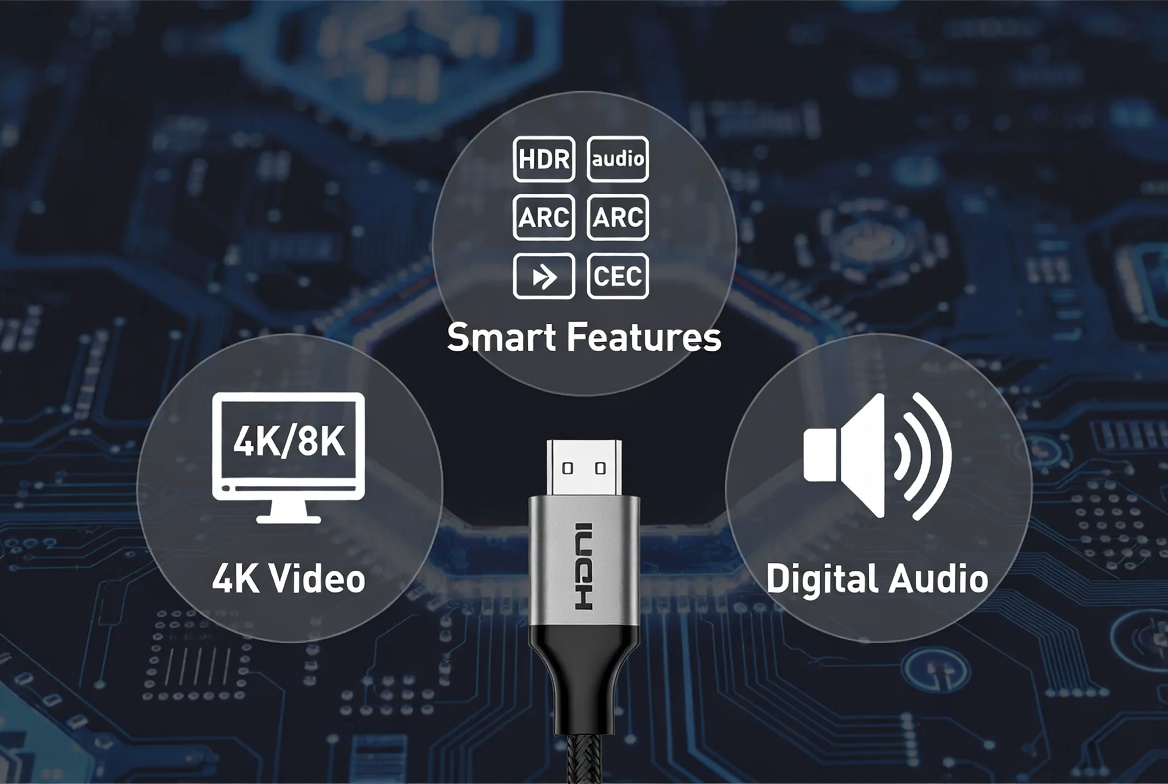
Modern HDMI implementations can handle up to 4K and even 8K video, high refresh rates, and technologies like HDR, ARC, and CEC, which enhance both image quality and user convenience. Because HDMI ports are found on televisions, laptops, gaming consoles, projectors, and industrial displays, it has effectively become the universal display interface for contemporary devices. [4xem]
VGA (Video Graphics Array) is an older analog video interface introduced in the late 1980s, originally developed for CRT computer monitors. It uses a 15‑pin connector and transmits only video, with no support for embedded audio signals. [geeksforgeeks]
In many classrooms, offices, and industrial environments, you still see VGA on legacy projectors and monitors because the installed base is large and replacement cycles are slow. However, VGA's analog nature means that signal quality degrades with distance, and it struggles to support modern high‑definition resolutions and high refresh rates reliably. [us.lemorele]
One of the most practical advantages of HDMI over VGA is signal consolidation: HDMI carries both video and audio in a single cable, whereas VGA can only carry video. With VGA, users must rely on separate audio connections—such as 3.5 mm analog audio cables or external audio systems—to deliver sound alongside the video signal. [reddit]
By contrast, HDMI simplifies installation and reduces cable clutter by transporting synchronized audio and video from source devices like PCs, media players, and game consoles directly to displays, TVs, or AV receivers. This is especially valuable in conference rooms, home theaters, and gaming setups, where fewer cables mean cleaner installations and fewer potential points of failure. [amissiontech]
The core technical difference between HDMI and VGA is the signal type: HDMI uses digital signals, while VGA relies on analog transmission. Digital signals maintain consistent quality over distance, deliver precise color reproduction, and are more resistant to electrical noise and interference. [anker]
Analog VGA signals, on the other hand, can suffer from ghosting, blurring, and color shift when cables are long or when they pass near sources of electromagnetic interference. This analog‑to‑digital conversion process (and often digital‑to‑analog back again inside modern displays) adds further opportunities for signal degradation, making HDMI the more reliable and future‑proof choice. [ghtcable]
As display technology has advanced, the ability to handle higher resolutions and refresh rates has become critical. HDMI supports HD, 4K, and even 8K resolutions along with high refresh rates, depending on the cable and version used. This allows it to accommodate modern use cases such as 4K televisions, high‑refresh gaming monitors, and professional editing displays. [lenovo]
VGA, by contrast, has practical limitations in supporting Full HD and beyond, especially over typical cable lengths used in offices and classrooms. For users who need crisp text, detailed graphics, or smooth video playback, HDMI provides a noticeably better experience than VGA in most real‑world scenarios. [vcelink]
HDMI's dominance is also driven by its broad hardware ecosystem support. Modern televisions, laptops, projectors, game consoles, streaming boxes, and many industrial display systems ship with HDMI as a standard interface. This means you can often connect devices directly without the need for additional adapters or converters. [4xem]
VGA's relevance today is largely limited to legacy devices, where it remains a cost‑effective option for basic presentations or older control systems. However, when connecting VGA sources to modern HDMI‑only displays, users may need active converters, adding both cost and potential points of failure, which further underscores the advantages of migrating to HDMI wherever possible. [us.lemorele]
Beyond raw resolution and audio support, HDMI offers advanced features that VGA cannot match. Modern HDMI implementations support HDR (High Dynamic Range), which improves contrast and color reproduction, as well as ARC (Audio Return Channel) and CEC (Consumer Electronics Control), which enable more integrated system control. [anker]
These capabilities allow users to control multiple HDMI‑connected devices with a single remote, simplify audio routing between TVs and sound systems, and unlock richer visual experiences for streaming, gaming, and professional content. VGA, being an analog‑only video interface, lacks any comparable feature set and cannot be upgraded to support these digital control and content‑protection mechanisms. [amissiontech]
When planning cable runs, signal integrity over distance is a key concern. VGA's analog signal quality degrades more noticeably as cable length increases, often resulting in reduced sharpness and increased noise. In contrast, HDMI's digital signaling maintains cleaner images over typical home and office distances, especially when high‑quality cables and appropriate gauge (AWG) are used. [amissiontech]
For longer runs—such as in conference rooms, industrial lines, or digital signage—users can employ active HDMI cables, repeaters, or fiber‑based HDMI solutions to extend distance without major quality loss. These options give HDMI a flexibility that VGA cannot easily match without significant compromises in image quality or additional hardware. [electronics.alibaba]
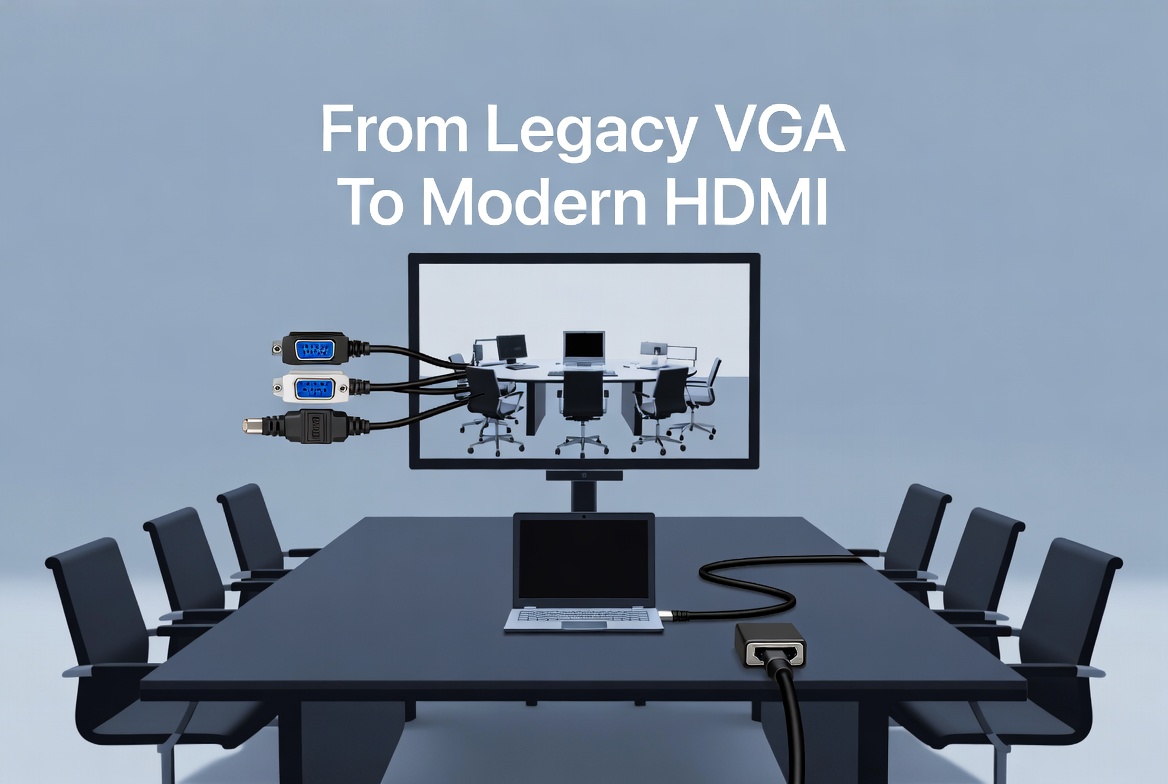
Consider a meeting room originally built around a VGA‑only projector and analog audio system. As laptops and collaboration tools evolve, most visitors now bring devices with HDMI outputs. Using VGA in this environment requires dongles, separate audio cables, and frequent troubleshooting. [ghtcable]
Upgrading to an HDMI‑based system simplifies user experience dramatically: a single HDMI cable from the table to the display carries both high‑definition video and audio, supports future devices, and reduces set‑up time at the start of meetings. For integrators and facility managers, this also reduces maintenance and support calls, since HDMI has become the standard that most users expect. [4xem]
Despite its limitations, VGA is not completely obsolete. In environments where legacy hardware must remain in service—for example, older industrial control systems, specialized lab equipment, or long‑installed classroom projectors—VGA can still be a practical choice. It offers a low‑cost way to keep these systems operational without full infrastructure replacement. [us.lemorele]
However, even in these cases, many organizations are gradually transitioning to HDMI‑based solutions as equipment reaches end‑of‑life. This phased approach allows them to balance cost control with the need to support modern devices and higher‑quality visual experiences. [ghtcable]
For brands, wholesalers, and manufacturers sourcing HDMI cables, the shift from VGA to HDMI creates both challenges and opportunities. The market now prioritizes reliable, standards‑compliant HDMI products that can handle high bandwidth, long‑term durability, and diverse deployment environments. [imarcgroup]
When selecting an OEM or ODM HDMI cable supplier, it is important to evaluate factors such as bandwidth capability, certification status, material quality, shielding design, and quality‑control processes, rather than focusing solely on marketing claims like "gold‑plated" connectors. This ensures that downstream customers—whether they are system integrators, retailers, or end users—receive cables that perform consistently in real‑world conditions. [youtube]
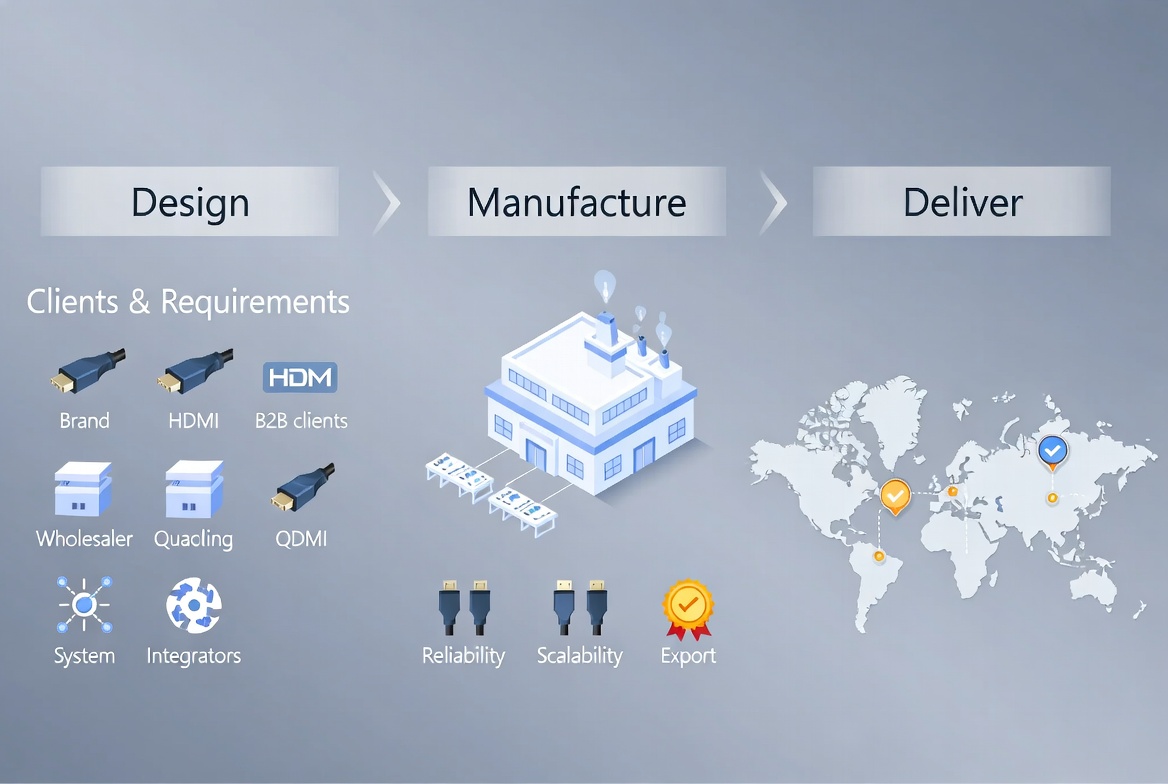
Zhuhai Yuxun Innovation Technology Co., Ltd. specializes in providing OEM and ODM HDMI cable solutions for overseas brands, wholesalers, and manufacturers seeking both performance and reliability in their cable portfolios. By focusing on structured design, material selection, and test‑driven verification, we help partners deliver HDMI products that align with today's high‑definition and high‑bandwidth demands. [amissiontech]
Whether you are building a private‑label cable line, integrating HDMI cables into broader hardware kits, or supplying industrial display systems, our team can co‑develop specifications, optimize cable construction, and support multi‑market compliance to strengthen your brand's positioning in a competitive market. [electronics.alibaba]
If your customers are still relying on VGA—or if you want to differentiate your offering with high‑quality HDMI cables tailored to real‑world use—now is the time to upgrade. Partnering with an experienced OEM/ODM manufacturer allows you to move quickly while maintaining control over branding, specifications, and cost. [imarcgroup]
Get in touch with Zhuhai Yuxun Innovation Technology Co., Ltd. to discuss your next HDMI cable project, from high‑speed consumer lines to rugged industrial cables capable of handling demanding environments and long‑distance installations. [amissiontech]
Q1: Why is HDMI generally better than VGA for modern displays?
HDMI provides digital video and audio in a single connection, supports higher resolutions and refresh rates, and is widely supported across modern devices, while VGA is an analog, video‑only legacy standard. [reddit]
Q2: Can I still use VGA if my devices support HDMI?
You can, but you will sacrifice image quality and convenience, since VGA requires separate audio connections and is more prone to noise and signal loss compared with HDMI. [reddit]
Q3: Does HDMI always deliver better image quality than VGA?
In most cases, yes: HDMI's digital signaling avoids many of the artifacts associated with analog VGA, especially at higher resolutions or over longer cable runs. [vcelink]
Q4: What should I look for when sourcing OEM HDMI cables?
Focus on bandwidth performance, certification, shielding quality, connector durability, and documented test results rather than purely on marketing terms like "premium" or "gold‑plated." [electronics.alibaba]
Q5: When is it acceptable to keep using VGA?
VGA remains acceptable when you must support legacy projectors, monitors, or control systems and when the cost of replacing these devices outweighs the benefits of migrating to HDMI in the short term. [anker]


